
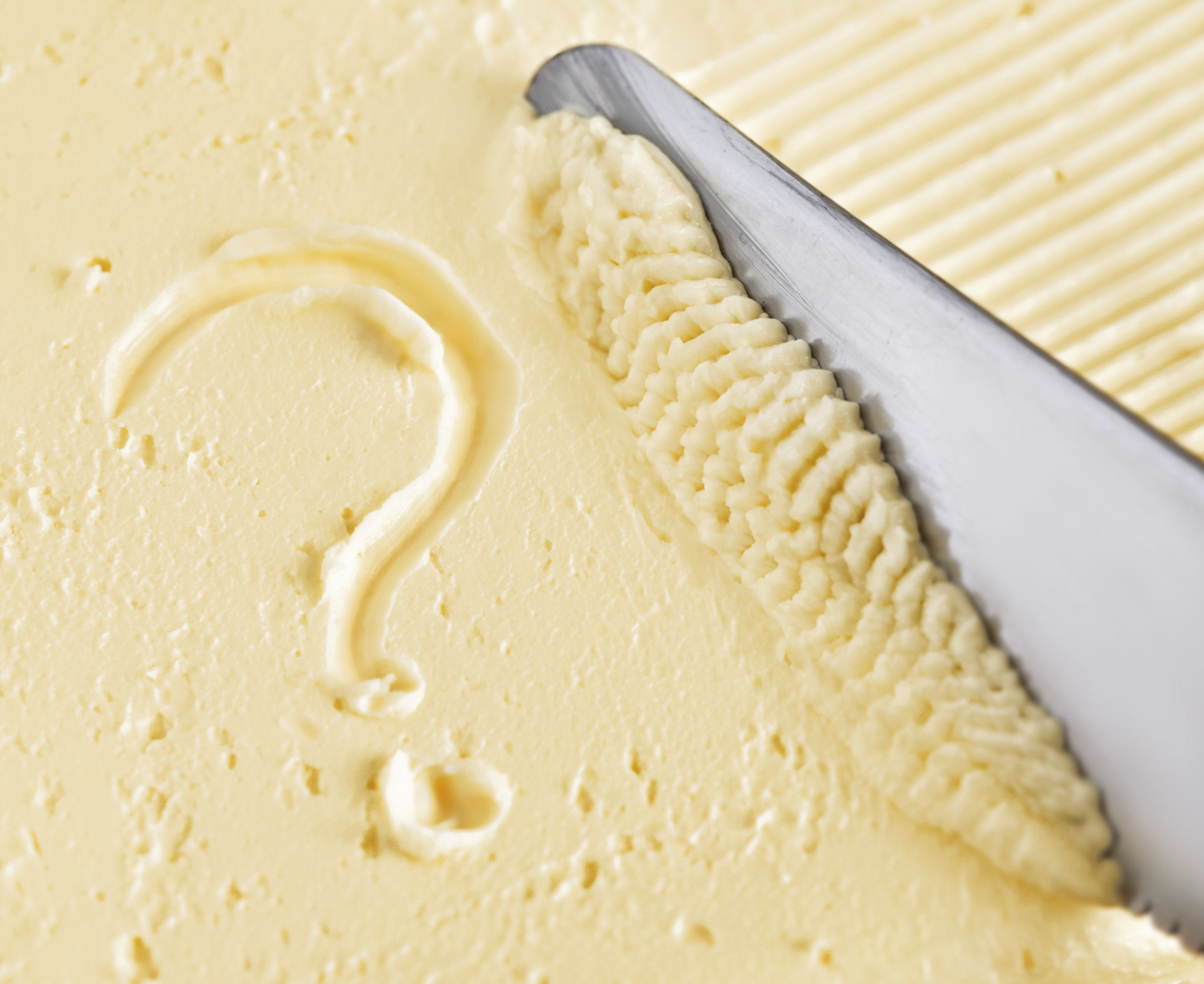
Buying ballet shoes aged 13 I was advised by a petite silver-haired lady that if I wanted to be a really good dancer I might try and lose a little weight. Leave off the butter on sandwiches, that sort of thing, she said. The idea of a stranger recommending an average-sized teenage girl go on a diet is worthy of a separate story; today, let’s concentrate on her advice.
“Leave off the butter”: that adage of the 1990s when fat was the enemy and the main job of food marketers was scribbling “low fat” on packaging. For decades, we bought skimmed milk, picked low-fat yoghurts, went sparingly with cheese. With conviction, we ditched butter for margarines made from plant-based oils and believed Boots when they told us a mini bag of pretzels was a “low fat” health-food snack.
20 years later I no longer aspire to be a ballet dancer and the situation is significantly more complex. In the media evidence accumulates that the low-fat diet has done nothing to control the world’s burgeoning waistline. Headlines read “The War on Fat is Over” and “High Fat, High Hopes”. Books and blogs on paleo, Atkins, bulletproof eating, all advocating plenty of grease, proliferate. From Glamour magazine to Good Housekeeping, health-giving recipes for oily fish, nuts and avocados are centre-spread. My son (four and a half years old), who has a predilection for butter, seems to instinctively agree. If you’ll let him (which I do on occasion), he’ll eat it in chunks direct from the dish. His favourite job when baking is greasing the tray, because he can lick off his fingers as he goes. And all the while, we wait for the mainstream healthy-eating rule book to be re-written.
Because, for all of this, fat has not yet been entirely rehabilitated to the realm of the nutritionally acceptable – especially not saturated fat. Counter headlines such as “Diets high in meat, eggs and dairy could be as harmful to health as smoking” undermine our confidence, as do recommendations on the NHS website for low fat dairy as opposed to its full fat counterpart and for a healthy breakfast smoothie made from banana, tinned mango, tinned peaches and water (little more than a glass of sugar). One of Boots’ best-selling health-food products is still the Shapers Strawberry Nougat Bar (low in fat but high in sugar); and at the other end of the food-consumer spectrum, Graze (an innovative food start-up aiming to post healthy snacks to our desks to graze on through the day) includes in their “light” snack box options such as sticky toffee pudding, made from rye flour, sugar and rapeseed oil, and dried apple rings with toffee sauce (not fatty but terribly sweet).
Widespread confusion is surely an inevitable consequence of such stark contradictions. Utterly confused myself and vaguely irritated, I decided I wanted to find out more. I read around – quite a lot and at length – but I cannot say that this has left me enlightened. My two most accurate conclusions are that a degree in biochemistry, perhaps even a PhD, would get me somewhat closer to the truth, and that science and food journalists seeking eye-catching headlines rather than solid information are a significant part of the problem.
A short summary of the few most useful ideas I gleaned (feel free to contradict):
- Some fats are very good for you – for your brain, heart, immune-system, general physical functioning, etc. These fats – monounsaturated and polyunsaturated – are found predominantly in fish, nuts, seeds, avocados, and olive oil and can be consumed generously. One caveat: olive oil is suitable for gentle sautéing but not deep fat frying (it’s too unstable and over the long run that might do you harm).
- The verdict is not as clear on saturated fats, as found in fatty meat, butter and coconut oil, but there are enough recent studies which suggest that these are not actually harmful at all (in normal amounts that is). My personal hunch based on what I’ve read is that it’s fine and nutritious but given the lack of a firm nod in either direction, you might want to avoid completely overdoing it (as with almost any food).
- Trans fats are the real baddies – for your heart, your health and your happiness – so much so that some countries (not Britain and the US) have banned them. In the few instances trans fats occur naturally, they are not thought to be dangerous. It’s the trans fats in partially hydrogenated fats – liquid vegetable oils heavily processed to become solid – that are the problem. Less likely to spoil, partially hydrogenated fats are used in many products with a long shelf-life, such as supermarket cakes, biscuits and sweeties. They used to be in margarines too, but most brands have significantly reduced the amount following bad press in the 1980s. Be warned if you’re often tempted by take-away: partially hydrogenated fats can withstand repeated heating without breaking down, making them ideal for frying fast food.
I am yet to find real definitive answers, particularly on saturated fats, but based on everything I’ve read with my laywoman’s understanding, here’s my advice:
- Eat fat and don’t count calories.
- Indulge in plenty of fish – especially wild salmon, mackerel and sardines.
- Treat yourself to a high quality extra virgin olive oil for salad dressings. Don’t waste your time with sunflower oil or rapeseed oil (too high in omega-6 – I’ll write about this another day) and be sure to skip shop-bought or restaurant salad dressings (unless it’s a fancy restaurant) because they’re invariably made from low quality oil and lots of sugar.
- Sauté (gentle frying of, for example, onions for a tomato sauce) on a low heat with olive oil, but replace this with butter or coconut oil if you want to fry something hotter. Use butter, ghee or coconut oil for roasting vegetables.
- Eggs are one of the most perfectly nutritious foods around. We’re lucky to have them, so eat them, and all of them, often.
- Generously daub butter on vegetables (and bread if you like to eat it).
- Enjoy cheese, cream (and meat if you choose), but don’t gorge.



 Of Slender Means